Weekend house hunting often starts with a feeling before it becomes a floor plan. You may know you want age, texture, and a real sense of place, but not yet know how to read the clues from one village to the next. In Litchfield County, architecture tells that story clearly, from colonial cores to layered country-house districts. If you are planning a design-minded drive through the region, this guide will help you spot the styles, understand the settings, and see why the county feels so enduring. Let’s dive in.
Why Litchfield County rewards a slow drive
Litchfield County is best understood as a layered domestic landscape, not a place defined by one single look. Historic records describe Litchfield’s center as a notably intact late-18th-century New England town organized around the Green, while nearby Washington Green shows how an older colonial settlement evolved into a country-house district with white-painted wood buildings, stone houses, Shingle-style homes, and later modern architecture.
That mix is part of the appeal for weekend explorers. Instead of seeing one era repeated over and over, you can read the county as a sequence of settlement patterns, greens, hills, and roadfronts. The result is a compact region where centuries of building history still feel legible from the car window and even more so on foot.
Styles to spot on sight
If you are touring homes or simply trying to sharpen your eye, it helps to know the main architectural languages you will encounter. In Litchfield County, the most interesting moments often come from overlap, where an early house gained a later doorway, porch, or wing rather than being replaced outright.
Colonial and vernacular houses
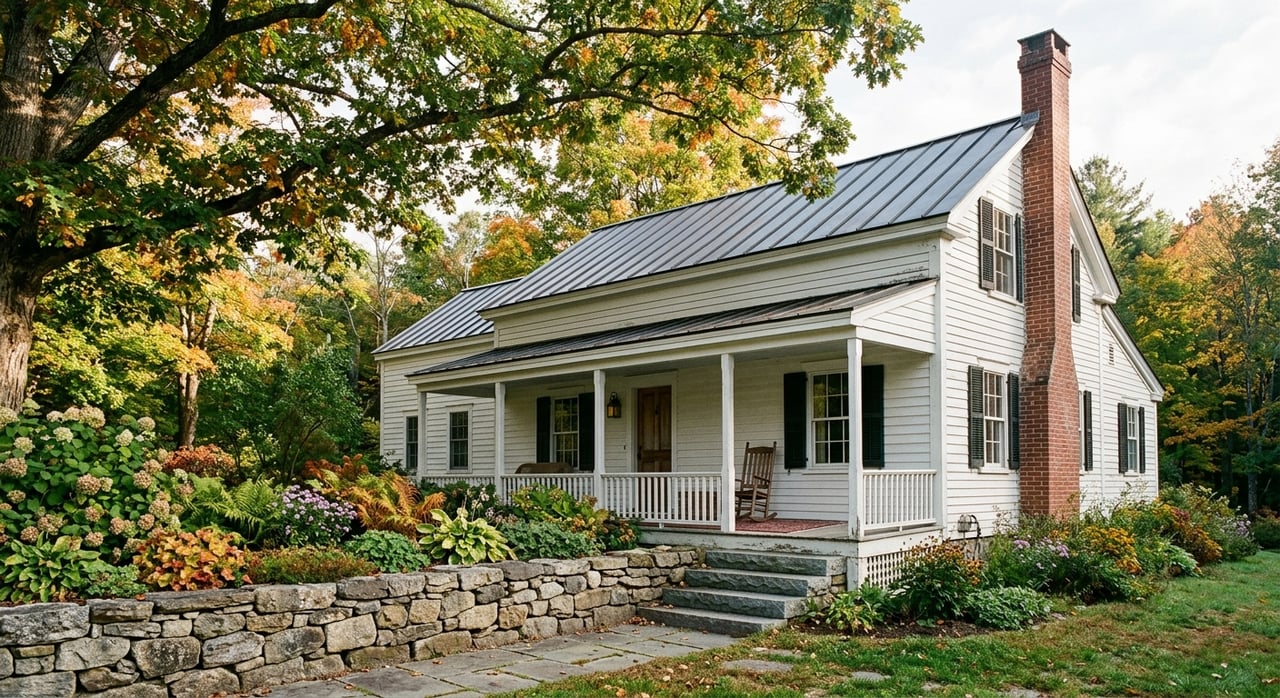
Early colonial houses in Connecticut were often timber-frame buildings with clapboard or shingle siding and steep roofs. Common forms included gable, saltbox, and gambrel shapes, which still anchor parts of the county’s visual identity.
These are the houses that often feel most rooted to the land. They tend to be simple in massing, practical in layout, and rich in texture. In Litchfield County, examples such as the Lynde Lord House, the Benjamin Talmadge House, and the Bellamy-Ferriday House help illustrate that long colonial timeline.
Georgian and Federal houses
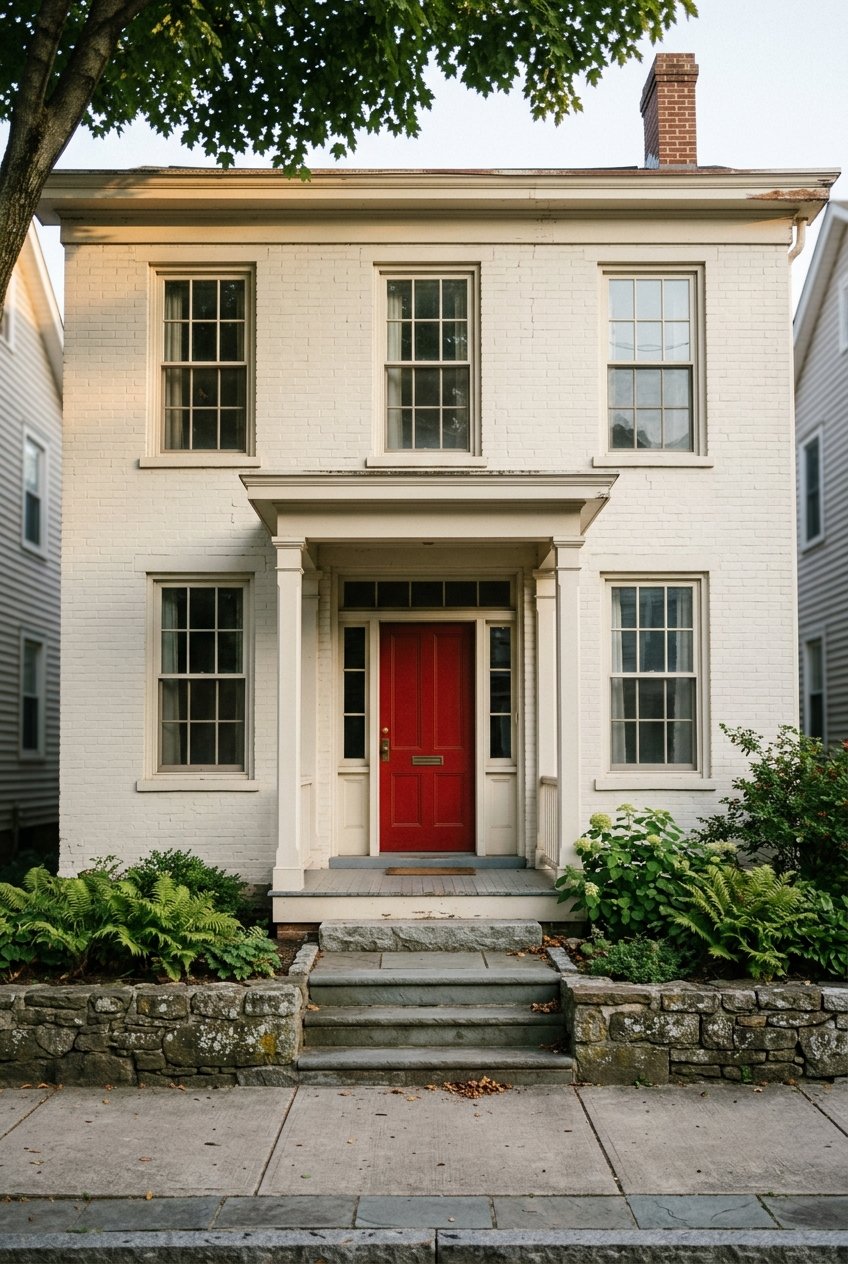
Georgian and Federal architecture usually reads as more formal and composed. You will often see symmetry, a centered front entry, fanlights, Palladian windows, and in some cases hipped roofs or pedimented porches.
In Litchfield, Sheldon Tavern, the Oliver Wolcott Sr. House, and the Tapping Reeve House are key examples. Similar details appear in Sharon and in Salisbury’s Lakeville village, where early houses bring the same visual language into slightly different village settings.
Greek Revival and later 19th-century layers
Greek Revival brought temple-inspired forms into domestic architecture, including pedimented rooflines and columned porches. In many Litchfield County villages, those details were added to older building traditions instead of replacing them entirely, which gives the streetscape a layered, lived-in quality.
As the 19th century continued, Victorian, Richardsonian Romanesque, Queen Anne, and Colonial Revival elements joined the mix. Sharon, Bridgewater Center, Lakeville, and Washington Green all show this kind of architectural layering in both residential and civic buildings.
20th-century country houses
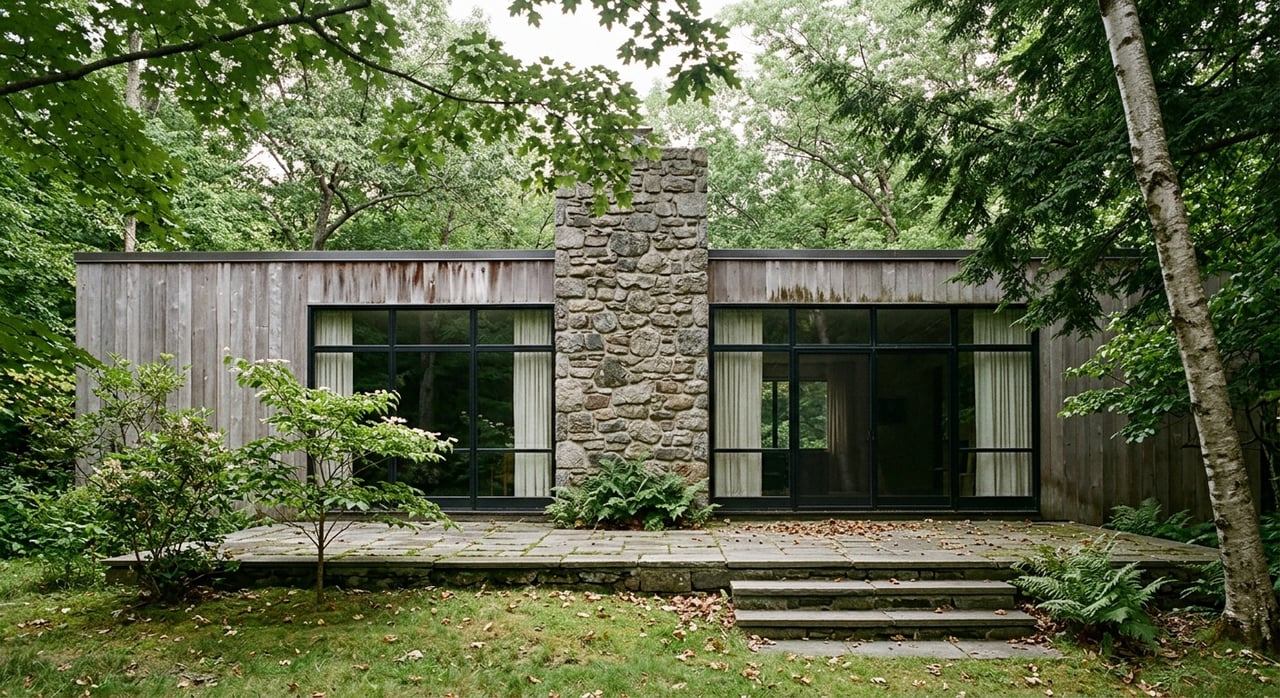
By the early 20th century, the county’s story expands again. You begin to see Colonial Revival reinterpretations, Shingle-style houses, and later modern architecture, especially in places that developed as refined country-house settings.
Washington Green is one of the clearest places to see that transition. State preservation records also note that post-World War II residential development in Connecticut often favored ranch and Cape Cod-type dwellings, adding another chapter to the county’s architectural story.
Best villages for an architecture weekend
If you only have a day or two, focus on village clusters where the architecture is easiest to read. These places offer a strong sense of continuity, and each tells a slightly different story about how Litchfield County evolved.
Litchfield village
Litchfield village is one of the best places to understand the classic village-green composition. Historic documentation describes it as a notably intact late-18th-century New England town, with the street pattern still organized around the Green and a substantial group of Georgian-era houses.
This is also where you can see major public anchors, including the Tapping Reeve House and Litchfield Law School, identified by the Historical Society as the nation’s first law school. For anyone drawn to orderly streetscapes, civic history, and early domestic architecture, this is a natural starting point.
Washington Green
Washington Green shows a different chapter in the county’s evolution. Here, an old colonial center developed into a country-house district with a hilly setting, predominantly white-painted buildings, stone houses, a stone Gothic Revival church, a stone Colonial Revival library, and later modern architecture at the Gunnery campus.
If you are interested in how rural refinement changed the built landscape, this stop is especially rewarding. It offers a more curated country-house feeling without losing the legibility of the original settlement pattern.
Bridgewater Center
Bridgewater Center is a cohesive crossroads village organized around Center Park. Official district records count 77 resources here, including 23 historic residential properties, and note a strong collection of Federal and Greek Revival houses with later Queen Anne, Neo-Classical Revival, and Colonial Revival additions.
This is the kind of place that rewards careful looking. You can see how a village stays visually unified even as styles shift across generations.
Salisbury and Lakeville
Salisbury and Lakeville are especially useful if you want a working-village view of architecture. District records describe the area as a former cutlery and railroad center that still holds Federal residences, Italianate industrial buildings, Colonial Revival civic structures, and a late-19th-century street grid.
That combination gives the area a slightly different rhythm from the green-centered villages. It feels less like a preserved tableau and more like a place where commerce, industry, and domestic life shaped the streets together.
Sharon
Sharon offers one of the county’s strongest single-green streetscapes. The district includes more than 100 houses and buildings around Sharon Green, with many early houses showing Federal details alongside Victorian houses, a Richardsonian Romanesque public library, and a Colonial Revival school.
The Green itself marks the remains of the colonial common, which gives the village both visual order and historical depth. If you enjoy spotting subtle stylistic changes along one continuous walk, Sharon is hard to beat.
Roxbury Center
Roxbury Center is a strong example of conservative rural domestic architecture absorbing change over time. District records note Federal and Georgian houses, Greek Revival doorways and porticoes, and later Queen Anne or Victorian alterations, all within a rural road-based setting.
This stop is less about showpiece architecture and more about continuity. It helps you understand how a place can evolve gradually while still holding onto its original structure and scale.
What to notice beyond the main house
One of the most useful details in official district inventories is how often they count barns, carriage houses, and other outbuildings as contributing resources. In this part of Connecticut, the historic property experience often depends on the full ensemble rather than the main house alone.
For buyers, that matters. A property’s character may come as much from its barn, approach, stone walls, and relationship to the road as from the front facade. For sellers, it is a reminder that thoughtful presentation should tell the story of the whole setting, not just the primary residence.
Why this matters for buyers and sellers
If you are shopping for a weekend home, understanding local architecture helps you move beyond vague preferences. You can start naming what you actually want, whether that is a formal Federal village house, a white-painted country property, or a layered house with later Victorian additions.
If you are preparing to sell, this same vocabulary can sharpen how your home is positioned. Buyers drawn to architecturally significant properties often respond to provenance, material honesty, and the way a house fits into its larger setting. A strong presentation makes those qualities visible.
For a design-minded audience, Litchfield County is compelling because it offers continuity without sameness. Colonial cores, later civic buildings, Victorian flourishes, and 20th-century country-house layers all coexist within a region that still feels coherent on a weekend drive.
Historic status and stewardship basics
Historic designation is often misunderstood, especially by buyers considering an older home. Connecticut SHPO notes that National Register listing alone does not prevent alteration, while locally designated historic buildings are generally reviewed under local design guidelines.
That means historic status is better understood as a stewardship framework than a complete freeze. Connecticut also administers historic rehabilitation tax credits for qualifying projects, and some homeowners may be eligible for a separate historic-homes credit on primary residences.
For anyone considering a purchase, the practical takeaway is simple. Ask how a property is designated, what level of review applies, and how any future work may fit within local guidance. That kind of clarity supports better decisions from the start.
If you are looking at architecturally significant homes in this broader region, a thoughtful real estate approach matters. The right guidance helps you read not only square footage and finishes, but also context, provenance, and the full narrative that gives a property lasting value. That is especially true for buyers and sellers who care about restoration, presentation, and design-led marketing.
When a home has character, the story around it should be just as carefully shaped. If you are thinking about buying or selling a historic or design-forward property in the Hudson Valley and nearby country markets, Annabel Taylor brings a warm, editorial approach grounded in stewardship, presentation, and local knowledge.
FAQs
What architectural styles are most common in Litchfield County?
- Litchfield County includes colonial and vernacular houses, Georgian and Federal homes, Greek Revival buildings, Victorian-era additions, Colonial Revival properties, and some 20th-century Shingle-style and modern architecture.
Which Litchfield County village is best for a first architecture tour?
- Litchfield village is a strong first stop because it offers an intact late-18th-century New England town plan organized around the Green, along with major historic houses and civic landmarks.
What makes Washington Green different from other Litchfield County villages?
- Washington Green stands out because it shows how a colonial center evolved into a country-house district with white-painted wood buildings, stone houses, Shingle-style homes, and later modern architecture.
Why should buyers notice barns and outbuildings in Litchfield County?
- District inventories often count barns, carriage houses, and other outbuildings as contributing resources, which means the full property ensemble can be a major part of the home’s character and historic value.
Does National Register status restrict changes to a home in Connecticut?
- Connecticut SHPO states that National Register listing alone does not prevent alteration, though locally designated historic buildings are generally reviewed under local design guidelines.
Are there historic tax credits for homes in Connecticut?
- Connecticut administers historic rehabilitation tax credits for qualifying projects, and some homeowners may also qualify for a separate historic-homes credit on primary residences.