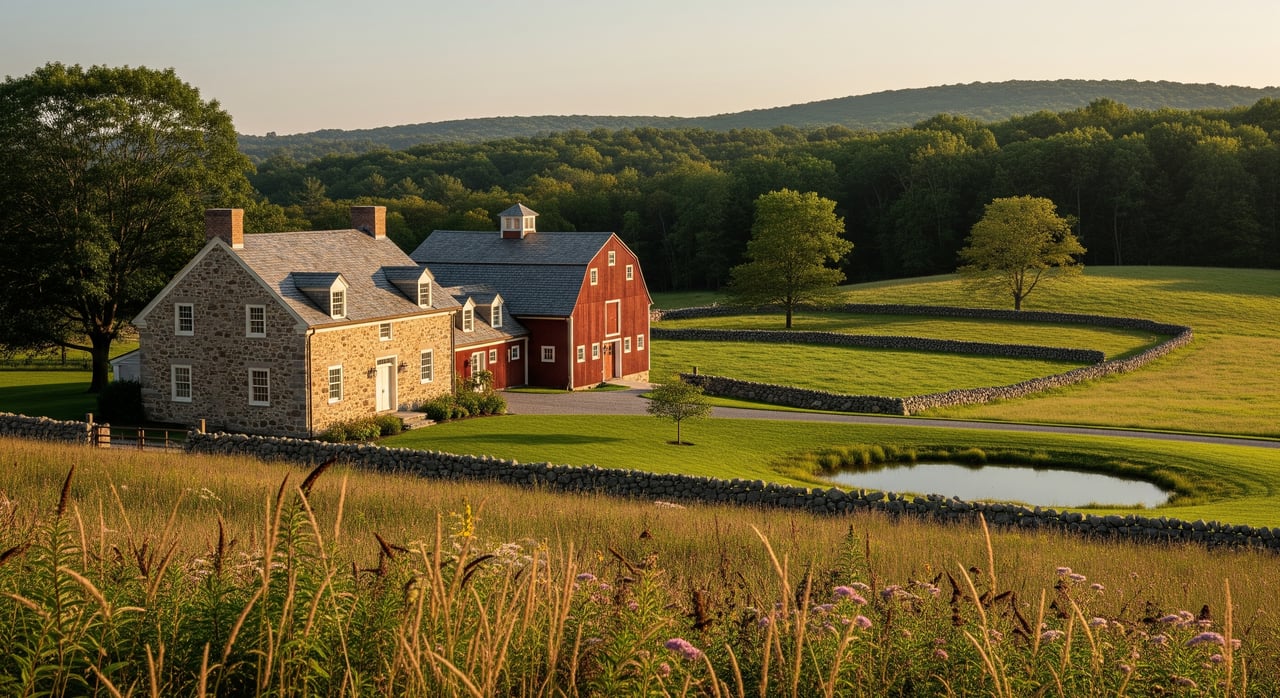
Eyeing a farmhouse with acreage in Litchfield County or the Hudson Valley and noticing the words “conservation easement” in the listing? You are not alone. Many of the most beautiful country properties here carry these long-term restrictions that protect land and views. In this guide, you will learn what a conservation easement is, how it shapes what you can build or change, the due diligence to do before you make an offer, and where to find reliable local resources. Let’s dive in.
Conservation easements explained
A conservation easement is a legally recorded agreement that limits certain uses of land to protect conservation values such as open space, habitat, agriculture, or scenic views. It is voluntary, created by a landowner, and is held by a qualified organization like a land trust or a government agency. The key point is that it runs with the land, so future owners must follow the same rules.
The easement deed is the controlling document. It lists what is allowed and what is prohibited, along with any maps, surveys, and specific building areas. Easement holders typically monitor the property on a set schedule and keep records. To learn the national standards and basics, start with the Land Trust Alliance.
Many easements are perpetual. If the original landowner donated the easement for charitable purposes, federal tax rules under Section 170(h) of the Internal Revenue Code apply. You can review federal guidance on charitable contributions through the IRS. State law governs recording and enforcement, so the exact procedures vary between Connecticut and New York.
You will often see a Baseline Documentation Report (BDR) that describes the property at the time the easement was created. Some easements also include a stewardship fund to support monitoring and legal defense over time. Ask early about any one-time or ongoing stewardship payments that may transfer to you at closing.
How easements shape building and use
Building envelopes and new construction
Most rural easements define where you can build by using a mapped building envelope. This is a specific area on the property where new structures may be permitted. Outside the envelope, new development is typically restricted or prohibited.
Common patterns include:
- One primary residence within the envelope and a limited set of accessory structures, often with size or height caps.
- The ability to repair or replace existing buildings, sometimes with limits on expanding the footprint or going higher.
- Setbacks from streams, wetlands, ridgelines, and view corridors that further shape placement.
- Limited or no subdivision rights. Splitting the land into new lots is often not allowed or requires the holder’s approval.
The practical takeaway: you may add modest outbuildings or improve what is there, but moving a future house site or creating new lots is often off the table.
Agriculture and forestry
Many local easements allow agriculture, grazing, or managed forestry. Activities often must follow best practices and, in some cases, a written management plan. Commercial development uses that change the character of the land are usually restricted, and some commercial energy installations may require approval.
Public access and recreation
Public access is not automatic. Some easements allow hiking trails or passive recreation, while many do not permit any public access at all. Always check the deed to see whether public access is required, and if so, where people may enter and what activities are allowed.
Utilities, roads, and infrastructure
Easements usually address utilities and private road access. You may be allowed to install or maintain necessary utilities within defined corridors or in locations approved by the holder. Emergency and maintenance access are typically preserved, but visible infrastructure can be restricted to protect scenic values.
Can terms change over time
Perpetual easements are designed to be permanent. Some deeds permit limited amendments if both the owner and holder agree, following a defined process. Courts may consider changes in rare cases, but the legal standards are high and vary by state.
Due diligence for buyers
Request key documents early
Before you fall in love with a setting, get the full picture in writing. Ask for:
- The recorded easement deed plus any amendments or related instruments.
- The current deed and chain of title naming the easement holder.
- The Baseline Documentation Report and all map or survey exhibits that show building envelopes, setbacks, and restricted areas.
- Monitoring reports and any notices of violation or correspondence with the holder.
- Any stewardship or monitoring fund agreement, including amounts and who pays.
- A title commitment showing easement-related exceptions.
- Historic and current surveys that mark corners, encroachments, driveways, wells, and septic in relation to the building envelope.
- Zoning, wetlands, and soils maps, since zoning and the easement both apply.
Call the easement holder
The holder is the authority on how the easement is enforced. Ask:
- What envelopes, reserved rights, and permitted uses are documented for this parcel?
- What is the monitoring schedule and recent inspection history?
- Are there any open violations or boundary disputes?
- Are there stewardship fees or endowments tied to transfers?
- What is the process to review small changes, such as relocating a driveway within the envelope?
- Does the deed require public access, and where are access points if so?
Lenders, title, and insurance
Tell your lender early that you are considering a property with a conservation easement. Lenders review these deeds closely because some restrictions can affect future marketability. Many lenders will finance these properties once they see the deed and any required acknowledgments from the holder.
Your title company and attorney should confirm that the mortgage position and the easement are properly aligned. In many cases, the easement is senior to any new mortgage, and the holder’s enforcement rights remain intact. Speak with your insurance agent as well, especially if public access is allowed, to confirm how coverage and liability work for your situation.
Taxes and valuation
An easement can reduce market value by limiting development rights. Local assessors may reflect that in assessed value, but it is not automatic. If you plan to donate an easement in the future, charitable deduction rules are complex and require a qualified appraisal and strict compliance with federal standards. For state-level background, review guidance from the Connecticut Department of Energy & Environmental Protection and the New York State Department of Environmental Conservation.
Survey and siting
Make sure the mapped building envelope and setbacks match an accurate field survey. Older easements can have mapping that does not align perfectly with on-the-ground monuments. If anything looks ambiguous, commission a new survey that ties envelopes and setbacks to actual pins and lines.
Quick buyer checklist
- Easement deed, amendments, and exhibits
- Baseline report and monitoring history
- Envelope map matched to a current survey
- Holder contact and written answers to your use questions
- Stewardship fund details and transfer obligations
- Title commitment and lender review
- Zoning, wetlands, and soils data from the town or county
Local context in Litchfield, Dutchess, and Putnam
Litchfield County and the adjacent Hudson Valley counties value open space, scenic ridgelines, farms, and forest blocks. Conservation easements are common tools here to protect rural character and water quality in the Housatonic and Hudson River watersheds. If you love unspoiled views and working landscapes, an easement can align with your goals for stewardship.
Motivations often include preserving farmland and pasture, maintaining scenic views from public roads and neighboring hills, and planning for long-term legacy outcomes. Many multi-generation landowners chose easements to define a clear future for their land. As a buyer, you benefit by knowing exactly what will be preserved.
Who holds local easements
Holders in this region include local and regional land trusts, town or county open space programs, and state agencies when state funds were used. The recorded deed names the holder, which is your first call for clarity. To help identify local organizations, use the national directory and standards from the Land Trust Alliance.
Local resources and contacts
- Land Trust Alliance for national standards and a directory of land trusts
- Connecticut DEEP for statewide conservation programs and open space grant context
- New York State DEC for state easement information and programs
- Scenic Hudson for regional conservation projects and examples in the Hudson River valley
- Town land use or conservation commissions in Litchfield, Dutchess, and Putnam for local mapping and context
Common local issues to watch
- Older easements with mapping that needs a modern survey tie-in
- Unrecorded historical uses that are not obvious from title alone
- Listings that overstate subdivision or building options not allowed by the deed
- Confusion about public access when a deed does or does not require it
When an easement can be an asset
If you value privacy, open pastures, and protected views, an easement can be a feature rather than a hurdle. It gives you a clear framework for what will endure on the land and often supports thoughtful agriculture and forestry. It may also help align neighbors around landscape stewardship.
Buyers who plan studios, barns, gardens, or low-impact trails can often succeed within the terms of a typical rural easement. The key is to confirm where and how those uses fit inside the building envelope and what approvals are needed. A clear plan and early conversations with the holder go a long way.
Work with a knowledgeable guide
Buying acreage with a conservation easement is very doable when you have the right information. You should assemble the deed, baseline report, and surveys, then speak with the holder, a local attorney, your lender, and the assessor. A clear due diligence path lets you write an offer with confidence.
If you are exploring properties across Litchfield County, Dutchess County, or Putnam County, we can help you focus on the right questions and connect with the right local resources. Our boutique approach pairs editorial clarity with practical guidance so you can buy with confidence and care. When you are ready to talk country properties and stewardship, reach out to Annabel Taylor.
FAQs
Can you build a new home on an easement property in Litchfield County?
- It depends on the deed; many allow one primary residence within a mapped building envelope and restrict new construction elsewhere, so ask for the envelope map and terms.
Do conservation easements lower property taxes in New York and Connecticut?
- Possibly; assessors may recognize reduced development potential, but treatment is local, so review recent assessments and speak with the town assessor.
Will a bank finance a home subject to a conservation easement?
- Many lenders will, but they need to review the deed and may require acknowledgment from the holder, so tell your lender early in the process.
Can a conservation easement be changed or removed later?
- Perpetual easements are intended to be permanent; limited amendments may be possible with holder approval and specific procedures, while removal is rare and complex.
Does a conservation easement require public access to my land?
- Not by default; some easements include public trails or access while others prohibit it, so check the deed for any access language and mapped entry points.
Can you farm, hunt, or harvest firewood on an easement property in the Hudson Valley?
- Many easements allow agriculture and sustainable forestry with best practices or a written plan; the deed will specify what is allowed and any required approvals.